You feel it every year, even if you don’t always name it. It’s when winter truly sets in that your hunger shifts. Light meals feel insubstantial. Rotis made with regular wheat just don’t fill the belly as well. You crave food that lingers, that warms you from the inside, and that doesn’t have you reaching for snacks just an hour later.
This isn’t indulgence; this is the body asking for seasonal support.
Long before nutrition became a trend, Indian kitchens adjusted their flours to the weather. Winter wasn’t the season for refined grains or fast-digesting foods. It was the time for slower flours-ones that grounded the body, supported digestion, and silently kept you warm.
Also Read: Beauty Transformation: 5 Tips and Tricks for a New Look
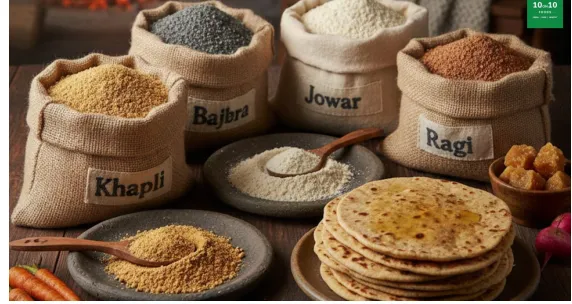
That’s where khapli atta, bajra atta, jowar atta, and ragi atta come in.
Why Winter Demands a Different Kind of Flour
Cold weather naturally slows digestion and circulation. Eating the same flour year-round often leads to heaviness, bloating, or constant hunger in winter. The right flour doesn’t just fill your plate, but it also works with your body.
A winter-friendly atta should:
- Digest slowly without feeling heavy
- Generate gentle internal warmth
- Keep energy steady for longer hours
- Support gut comfort
This is exactly why traditional flours return every winter. And among them, khapli atta stands apart in a way modern wheat simply doesn’t.
Khapli Atta: The Quiet Strength of an Ancient Grain
Khapli wheat, commonly referred to as Emmer wheat, has been one of the oldest forms of wheat that has been grown in India. Unlike hybrid wheat, this type of wheat has never been tampered with to make it faster, bigger in quantity, or bigger in mass. It has remained essentially the same, and that’s something that will impact you directly.
Khapli atta is heavy yet light on the stomach. Rotis made of it tend to be very pleasing to the palate without being heavy or difficult to digest. Moreover, they tend to release energy slowly, which is precisely what the body requires during the winter.
Many people who experience bloating or discomfort from regular wheat find that khapli wheat atta is easier to digest. It can also be traditionally described as gluten-free khapli atta. This is not entirely accurate since it does not mean there is no gluten; however, the gluten structure is much softer compared to regular wheat.
In stone-ground khapli wheat flour, the nutrients remain intact. Nothing is lost, nothing is hurried. That’s why there is a sensation of grounding, rather than drain.
For anyone looking to eat seasonally and wisely, decide to purchase khapli atta.
Bajra Atta: Built for Cold Mornings and Long Days
If khapli atta grounds the body, bajra atta actively warms it.
Bajra has always been a winter grain for a reason. It’s thermogenic, meaning it generates heat as it digests. That warmth isn’t imaginary; you feel it almost immediately after eating.
Bajra rotis paired with ghee, jaggery, or winter vegetables create meals that sustain energy and protect the body against cold-related fatigue. This is the flour traditionally chosen when winters were harsher and days demanded physical endurance.
It’s bold, powerful, and unapologetically winter-specific.
Jowar Atta: When You Want Warmth Without Heaviness
Wintertime is sometimes overlooked as a time to eat jowar, but winter is a time of year when the benefits of jowar are most apparent. With a slightly lighter weight than bajra yet just as nourishing for colder-weather digestion, jowar is a great option for those who like to warm up while they eat but don’t want the heaviness of bajra or a regular wheat product.
The jowar atta digests clean and does not increase your hunger, and therefore it can be used in place of either of the two winter grains for those who find bajra too intense or regular wheat too light for them. In essence, jowar atta completes your winter grains.
Ragi Atta: Deep Nourishment for Winter Strength
While Ragi Atta is not specifically marketed as a “winter grain”, it certainly has benefits that make it perfect for the cold winter months. Ragi contains a high level of calcium, iron, and fibre, which helps to strengthen the body during cold weather, as well as during periods of low energy when the joints are cold and stiff.
In general, ragi takes longer to digest than most other grains. Therefore, it should be eaten at breakfast and dinner. Ragi, unlike bajra, does not produce a large amount of internal heat; however, it does contribute to the body’s “internal” strength over time. In the past, ragi was consumed in traditional diets during periods of low energy when people needed to build their bodies up rather than being stimulated.
This same logic applies today.
Seasonal Eating Isn’t a Trend, but It’s a Skill
Flour is taken as a set item in the modern diet based on today’s standards and method of thinking, while Ancient diets treated flour as a seasonal item.
Foods that Warm You up, Slow You Down, and Nourish Deeply during the winter are typically only available during these times; therefore, Khapli Atta, Bajra Atta, Jowar Atta, and Ragi Atta, along with other local flours, naturally become more popular during this time of year.
Changing only one roti per day (for example) to a more winter-friendly flour type will have a positive impact on your body by reducing bloating, increasing satisfaction, and providing gentle warmth.
Sometimes, doing what’s best for your health does not mean “adding” to your diet. Rather, it’s about “listening” to the food needs that nature has provided to us and then making the right choices for your health.