Most dog owners are genuinely trying to do right by their dogs. Nevertheless, certain dog feeding mistakes recur, often without the owner even realising they are making them.
Here is what to watch for.
What Are Dog Owners Getting Wrong?
1. Overfeeding Without Realising It
Overfeeding is one of the most common dog nutrition mistakes. However, it rarely feels like a mistake at the moment.
The feeding and dog nutrition guide on a packet is a starting point. It is based on an average dog of a given weight. It does not account for your dog’s activity level or the number of treats they receive throughout the day.
A dog that gets three meals, two training treats, and a chew in a single day may be consuming significantly more than their daily requirement without it looking excessive to the owner.
Body condition is a more reliable indicator than the number on a packet. Ideally, you should be able to feel your dog’s ribs without pressing hard, but not see them clearly from a distance.
Signs a dog may be consistently overfed:
- Gradual, unexplained weight gain
- Low energy or reluctance to exercise
- Digestive issues without a clear cause
- Always appearing hungry regardless of meal size
2. Feeding Human Food Without Checking
This is an easy habit to develop. Suppose your dog is nearby and you are eating. You think that sharing a small piece feels harmless.
Some human food is fine for dogs in small amounts. A plain piece of cooked chicken or a slice of carrot is not a concern. The problem is that many foods that are completely safe for people are not dog-safe treats at all.
Common human foods that cause problems for dogs:
- Onion and garlic in any form, including powders and cooked
- Grapes and raisins, as they may cause kidney failure even in small quantities
- Xylitol, an artificial sweetener found in many products, including some peanut butters
- Macadamia nuts
- Avocado
- Anything containing chocolate or caffeine
The risk is not always immediate. Some of these ingredients cause cumulative damage over time. Others cause acute reactions from a single exposure.
Before sharing anything from your plate, checking whether it is safe for dogs is a two-minute step that is worth taking every time.
3. Ignoring the Ingredient List
Choosing a product based on the front of the packaging is one of the more common unhealthy dog food habits.
Front-of-pack claims, like “natural,” “premium,” and “balanced”, are marketing terms. They are not regulated in the same way as ingredient lists are. The ingredient list is where the product’s actual composition is declared, in descending order by weight.
What to look for on any ingredient list:
- A named animal protein as the 1st ingredient, such as chicken, beef, or kangaroo
- No vague category terms like “meat derivatives” or “animal by-products”
- No artificial colours, flavours, or preservatives
- No added sugar or salt
Healthy dog food is a product with a pet-safe ingredient list. Spending an extra minute reading the back of the packet is one of the simplest things an owner can do to make an informed choice.
4. Inconsistent Meal Timing
Dogs do better with routine. Irregular meal timing is a dog diet mistake that affects their health.
A dog fed at different times each day cannot regulate its digestive system as effectively as one fed on a consistent schedule. Irregular timing can contribute to:
- Digestive discomfort
- Changes in stool quality
- Behavioural restlessness around mealtimes
This does not mean meals need to happen at exactly the same minute every day. A reasonable window of consistency is enough. Morning and evening meals at roughly the same time each day give the digestive system a reliable rhythm to work with.
Practical ways to build consistency:
- Tie meal times to your own daily routine, such as before your morning coffee or after your evening walk
- Use an automatic feeder if your schedule varies significantly day to day
- Keep a simple note for anyone else feeding the dog so timing stays consistent across the household
5. Treating Every Day Like a Special Occasion
Treats have a place in a dog’s diet. The issue is when the frequency and quantity of treats stop being occasional and become a daily habit that adds up significantly.
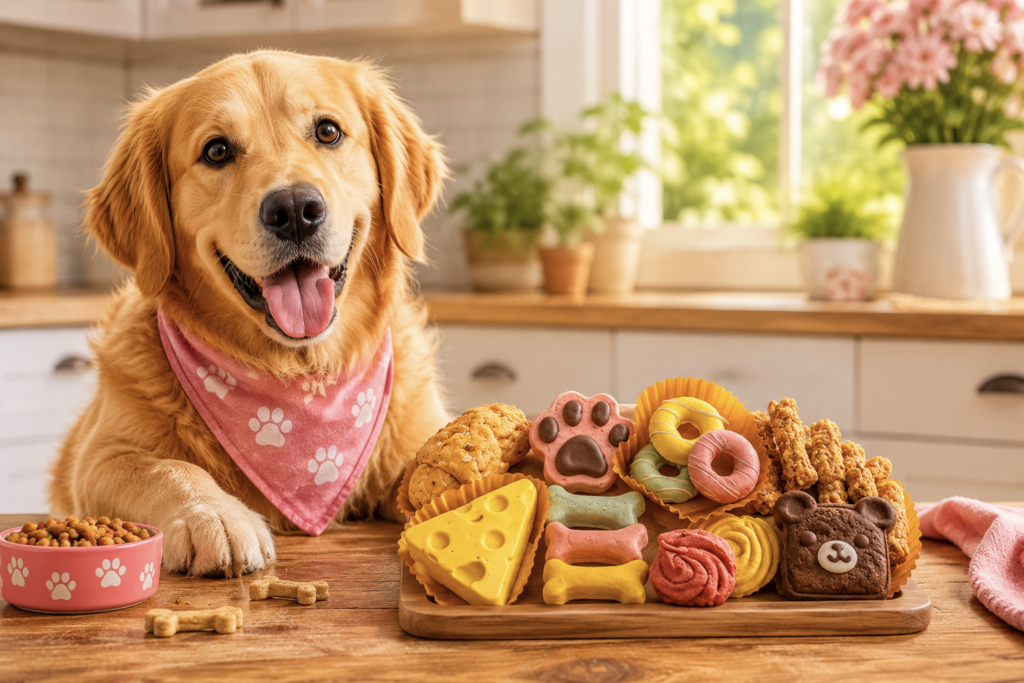
Some dog birthday treats and celebration products are formulated as occasional items. They are not designed to be given daily, and the calorie and ingredient load reflects that. When some celebration-style treats become part of the everyday routine, the cumulative effect on calorie intake and digestive health is meaningful.
A practical approach to treating:
- Set a rough daily treat allowance and count everything toward it
- Reserve higher-calorie treats for genuine occasions
- Choose treats with short, transparent ingredient lists for everyday use
- Factor treat calories into the overall daily intake, not as extras on top of it
6. Not Adjusting Diet as the Dog Ages
A puppy, an adult dog, & a senior dog have different nutritional requirements. Feeding the same amount of product across all life stages without adjustment is one of the more overlooked dog diet mistakes.
Puppies need higher protein and energy density to support growth. Adult dogs need a diet calibrated to their activity level and size. Senior dogs often need fewer calories, more joint-supporting nutrients, and sometimes a more digestible protein source.
What changes with age:
| Life Stage | Key Nutritional Focus |
| Puppy | Higher protein, energy density, calcium for bone development |
| Adult | Balanced macronutrients matched to activity level |
| Senior | Lower calories, joint support, easily digestible proteins |
Checking whether the product you are using is appropriate for your dog’s current life stage is worth doing at each annual vet visit.
Small Changes Make a Difference
These dog feeding mistakes are common precisely because they do not look like mistakes.
Correcting dog nutrition mistakes does not require an overhaul of your dog’s entire diet. It requires paying attention to a few specific things:
- What is in the ingredient list
- How much is being consumed across the whole day
- Whether the diet is still appropriate as the dog gets older